How to Fix the 30-Second Retention Drop in YouTube Videos (2026)
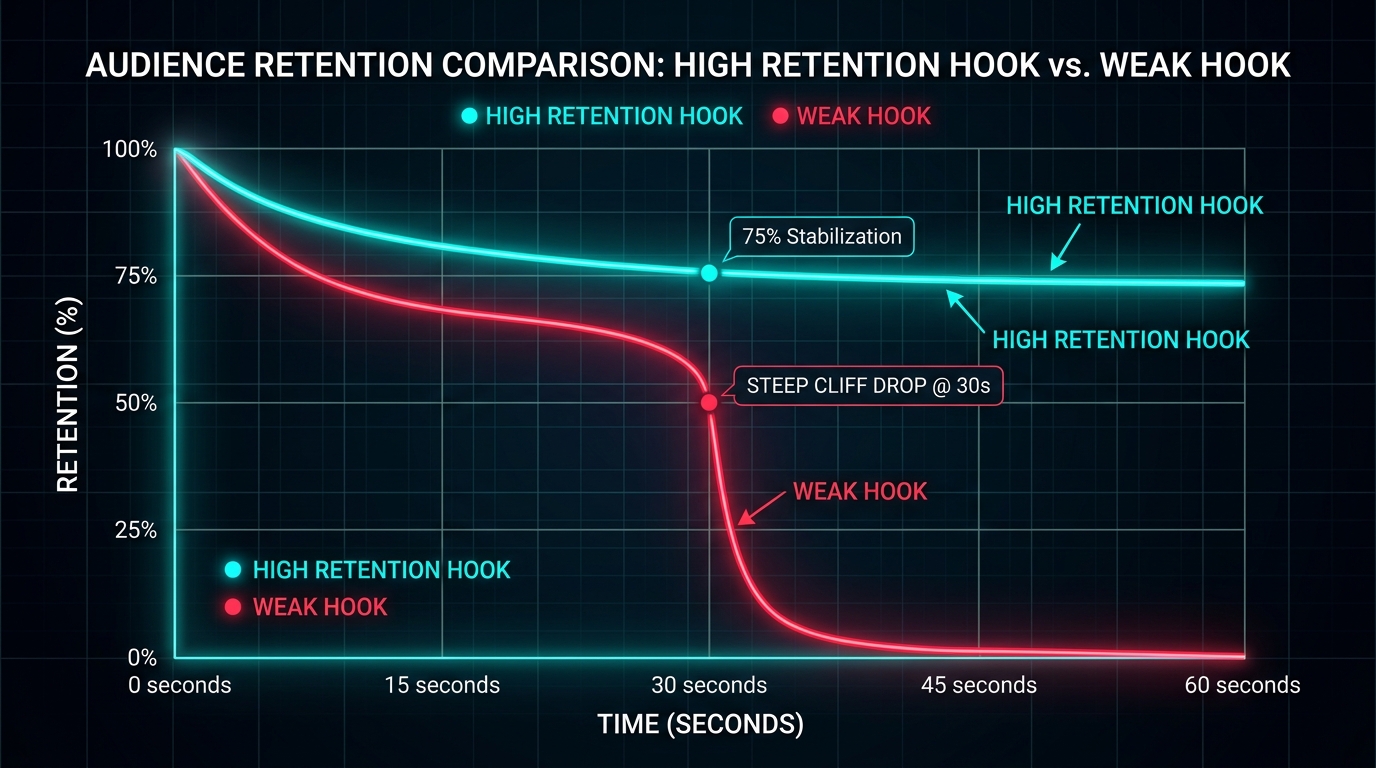
Open the Analytics tab for almost any underperforming video in YouTube Studio, click on Audience Retention, and you will almost certainly witness the most universally dreaded curve in digital video: the “30-Second Cliff Drop”. Within the first thirty seconds of playback, the retention graph plummets precipitously—often dropping from 100% down to 55%, 45%, or even 30%—before leveling out into a gentle slope for the remainder of the runtime.
To YouTube’s modern machine-learning recommendation engine, this initial cliff drop is an immediate red flag. The algorithm measures user satisfaction in real-time; if a high percentage of viewers abandon your video within 30 seconds, YouTube instantly halts impression distribution across the Home feed, Recommended sidebar, and search carousels. The good news is that this drop is not a reflection of your video’s core knowledge or cinematography. It is an engineering flaw in your opening hook architecture. In this definitive 2026 guide, we break down why the first 30 seconds dictate 100% of your algorithmic reach, diagnose the 5 deadly intro mistakes, and provide 4 battle-tested hook formulas to keep retention above 75%.
Key Takeaways: The 30-Second Retention Blueprint
- The 70% Benchmark Rule: In 2026, YouTube’s recommendation algorithm benchmarks top-performing videos at 70% or higher retention at the 0:30 timestamp. If your retention dips below 60% at 30 seconds, YouTube severely limits browse distribution to cold audiences.
- Delete All Animated Logo Intros: 5-second spinning 3D logos, motion graphics title intros, and branded splash screens trigger an immediate 15% to 25% retention drop. Modern viewers have zero patience for non-content filler.
- The 5-Second Confirmation: The viewer clicked for a specific promise made by your thumbnail and title. The opening five seconds must directly acknowledge and confirm that promise, eliminating all cognitive dissonance.
- Hook with Conflict, Not Context: Never start by explaining background context, history, or your filming schedule. Start in media res—at the highest point of curiosity, tension, or immediate practical value.
- Cut the “Pre-Show” Housekeeping: Asking viewers to subscribe, like, hit the notification bell, or check out your Patreon before you have delivered a single ounce of value causes immediate audience abandonment.
Why the First 30 Seconds Dictate Your Video’s Fate
YouTube’s recommendation system operates on an automated multi-stage cohort evaluation model. When you publish a video, the algorithm does not push it to 100,000 people at once. It first tests the upload on a small, highly targeted cohort of 200 to 500 viewers (primarily your notification subscribers and recent active channel viewers).
During this initial test, the algorithm tracks two critical telemetry signals: Click-Through Rate (CTR) and Early Retention Velocity (specifically retention at the 0:30 mark). If 40% of viewers click away before 30 seconds have elapsed, YouTube’s neural networks conclude that the video either made a false promise (clickbait) or was insufficiently engaging to justify broader distribution. The impression faucet is shut off before the video ever has a chance to reach cold, high-volume audiences.
Conversely, if 75% or more of that initial cohort is still actively watching at the 30-second mark, the algorithm receives an undeniable signal of user satisfaction. It immediately expands distribution to secondary lookalike cohorts across the Home browse feed, creating the viral traffic surge that every creator aims for.
The 5 Deadly Mistakes That Cause the 30-Second Cliff Drop
Analyzing thousands of retention graphs in YouTube Studio reveals that nearly every 30-second cliff drop is triggered by one of five common scripting and editing habits:
1. The “Hey Guys” Self-Indulgent Opening
Opening your video with: “Hey guys, welcome back to another video, I hope you’re having an awesome week, today we’re going to dive into…” is the fastest way to hemorrhage viewers. The modern viewer’s finger is permanently hovering over the back button or related video feed. They do not know you yet, and they do not care about your week. Every syllable that does not directly advance the promised value proposition induces viewer drop-off.
2. The Animated Logo Bumper (The 2016 Hangover)
Ten years ago, putting a flashy 8-second motion graphic intro bumper with blaring EDM music was standard practice. In 2026, it is lethal. Viewers perceive animated bumpers as commercial interruptions. The moment the music stings and the logo spins, 15% to 25% of viewers exit the video instantly. Delete all opening logos forever.
3. Context-First Instead of Conflict-First
If you are making a video titled “How I Built a Profitable Software Business in 90 Days”, do not open with 8 minutes of backstory about where you went to college in 2018. Open with the financial dashboard showing the \$15,000 monthly recurring revenue, state the singular insight that made it possible, and then briefly backfill the necessary context.
4. Audio Volume & Quality Shock
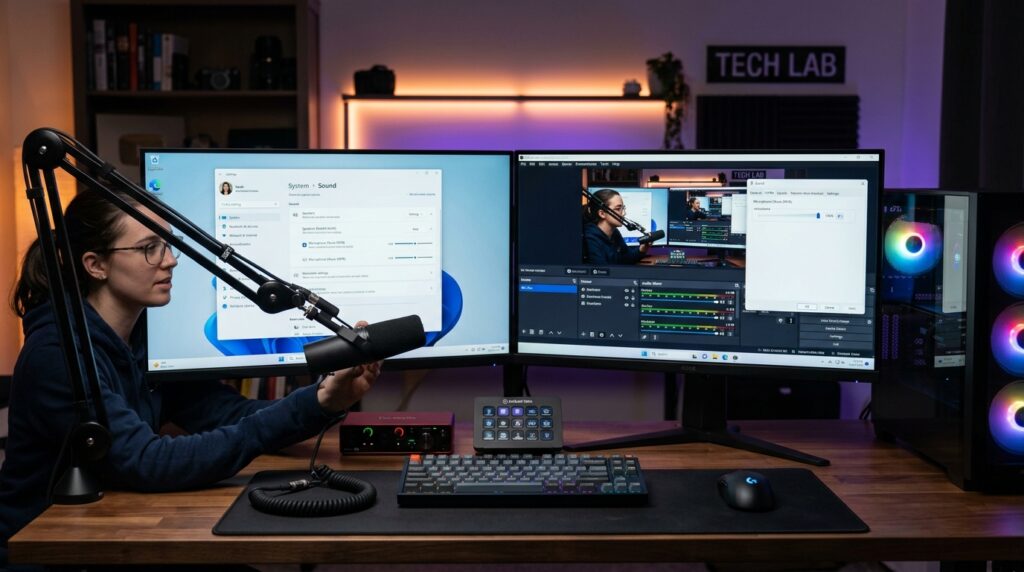
If your thumbnail looked polished and cinematic, but your opening audio is quiet, muffled, echoing in an untreated room, or accompanied by blaring background music that drowns out your vocal track, viewers experience immediate subconscious friction. Audio quality communicates professionalism faster than video resolution; bad audio kills initial retention within 5 seconds.
5. The Premature Call-to-Action (CTA)
Demanding that viewers subscribe, like, share, and comment within the first 20 seconds is fundamentally disrespectful of the viewer’s time. A subscription is an exchange of value: you provide insight or entertainment, and the viewer rewards you with their attention. Begging for subscriptions before delivering value guarantees viewer resentment and early abandonment.
The 4 High-Retention Hook Architectures for 2026
To keep your retention curve hovering comfortably above 75% at the 30-second mark, choose one of these four proven hook structures when scripting your opening:
1. The “In Medias Res” Hook (Entertainment & Vlogging)
In medias res is Latin for “in the middle of things”. Instead of starting at the chronological beginning, start at the most intense, high-stakes moment of the entire video. Show 4 seconds of a car spinning out, a drone crashing into a waterfall, or code throwing a critical server error. Cut to black at the peak of tension, then say: “Ten minutes before this disaster happened, everything was completely under control…”. The viewer is psychologically trapped until they see how the tension resolves.
2. The “Contrarian Myth-Buster” Hook (Education & Tech)
State a widely held industry belief that your audience assumes is true, and immediately shatter it with verified proof: “Almost every video editor will tell you that you need an expensive dedicated GPU to edit 4K video in 2026. They are completely wrong. In the next 8 minutes, I’m going to show you a simple free settings toggle in DaVinci Resolve that lets a \$400 laptop edit 4K 60fps without a single dropped frame.” You have created an irresistible curiosity gap.
3. The “Micro-Payoff” Hook (Tutorials & How-To)
In instructional videos, give the viewer an immediate, actionable micro-win in the first 20 seconds before diving into the comprehensive tutorial: “If you need to fix your washed-out colors right now, press Shift+9, go to Color Management, and change your tag to Rec.709-A. That fixes 80% of issues. But if you want to understand why QuickTime shifts your contrast and how to lock in perfect broadcast levels, here is the complete breakdown.” By delivering immediate value, you earn massive trust.
4. The “Stakes & Consequence” Hook (Business & Finance)
Highlight the severe real-world penalty of ignoring the video’s core advice: “If you are monetized on YouTube and haven’t verified this one specific tax checkbox in your Google AdSense account by the end of this month, the IRS will automatically withhold 30% of your worldwide ad revenue. Here is the 2-minute form you need to submit today to protect your earnings.” Fear of loss is twice as psychologically motivating as the hope of gain.
The 3-Act Script Architecture for the First 30 Seconds
| Time Window | Act / Purpose | Viewer Psychological State |
|---|---|---|
| 0:00 – 0:08 | Act 1: The Promise Confirmation | “Am I in the right place? Does this deliver what the thumbnail promised?” |
| 0:08 – 0:20 | Act 2: The Stakes & Curiosity Gap | “Why does this matter to me? What happens if I miss this?” |
| 0:20 – 0:35 | Act 3: The Roadmap & Immediate Action | “Let’s dive in. The creator is focused, knowledgeable, and wasting no time.” |
Frequently Asked Questions (FAQ)
Can I fix the 30-second retention drop on an existing video?
Yes. If you have an older video that has a devastating cliff drop due to a slow 45-second intro or an animated logo bumper, you do not need to re-upload it. Open YouTube Studio > Video Details > Editor. Use the Trim tool to cut out the first 30 to 45 seconds of fluff so that the video starts directly at the first impactful point. Once YouTube finishes processing the trim, new viewers will enter straight into the meat of the video, instantly improving ongoing retention.
How do I know if my hook is working?
In YouTube Studio, open the video’s Analytics page and inspect the Audience Retention report. Look at the specific percentage at 0:30:
- Below 50%: Severe problem. Intro must be restructured.
- 50% to 65%: Average. Room for significant tightening.
- 70% to 80%: Excellent. Strong algorithmic velocity indicator.
- 80%+: World-class hook execution. Expect massive browse reach.
Should I put text on screen during my hook?
Yes! Over 75% of YouTube viewing begins on mobile devices where videos autoplay silently in the feed. Displaying bold, dynamic kinetic text overlays during your opening 5 seconds ensures that viewers reading without sound instantly absorb your hook and tap the screen to unmute.
Are teaser montages effective for YouTube hooks?
Teaser montages (showing rapid 1-second clips of what’s coming up) can work for multi-topic podcasts or 30-minute travel vlogs, but they are often overused. If your montage lasts longer than 6 seconds, viewers treat it as a commercial and click away. If you use a teaser, keep it under 5 seconds and pair it with a single clarifying spoken thesis.
When is the best time to ask viewers to subscribe?
The single best time to request a subscription is immediately after delivering your video’s biggest value breakthrough (usually around the 70% mark of the video runtime). Say: “If this solution just saved you three hours of troubleshooting, hit the subscribe button so you don’t miss our upcoming deep-dive next week.” At this moment, the viewer feels genuine gratitude and is 10x more likely to subscribe.